Inland floodwater mosquito: why they appear in swarms after heavy rain
You had a week of good weather, then it rained hard for two days — and now there are mosquitoes everywhere, appearing seemingly overnight, biting relentlessly even in the middle of the day. That's almost certainly Aedes vexans. The inland floodwater mosquito has evolved one of the most effective population explosion strategies in the insect world: eggs that can survive bone-dry conditions for years, then hatch within hours of flooding.
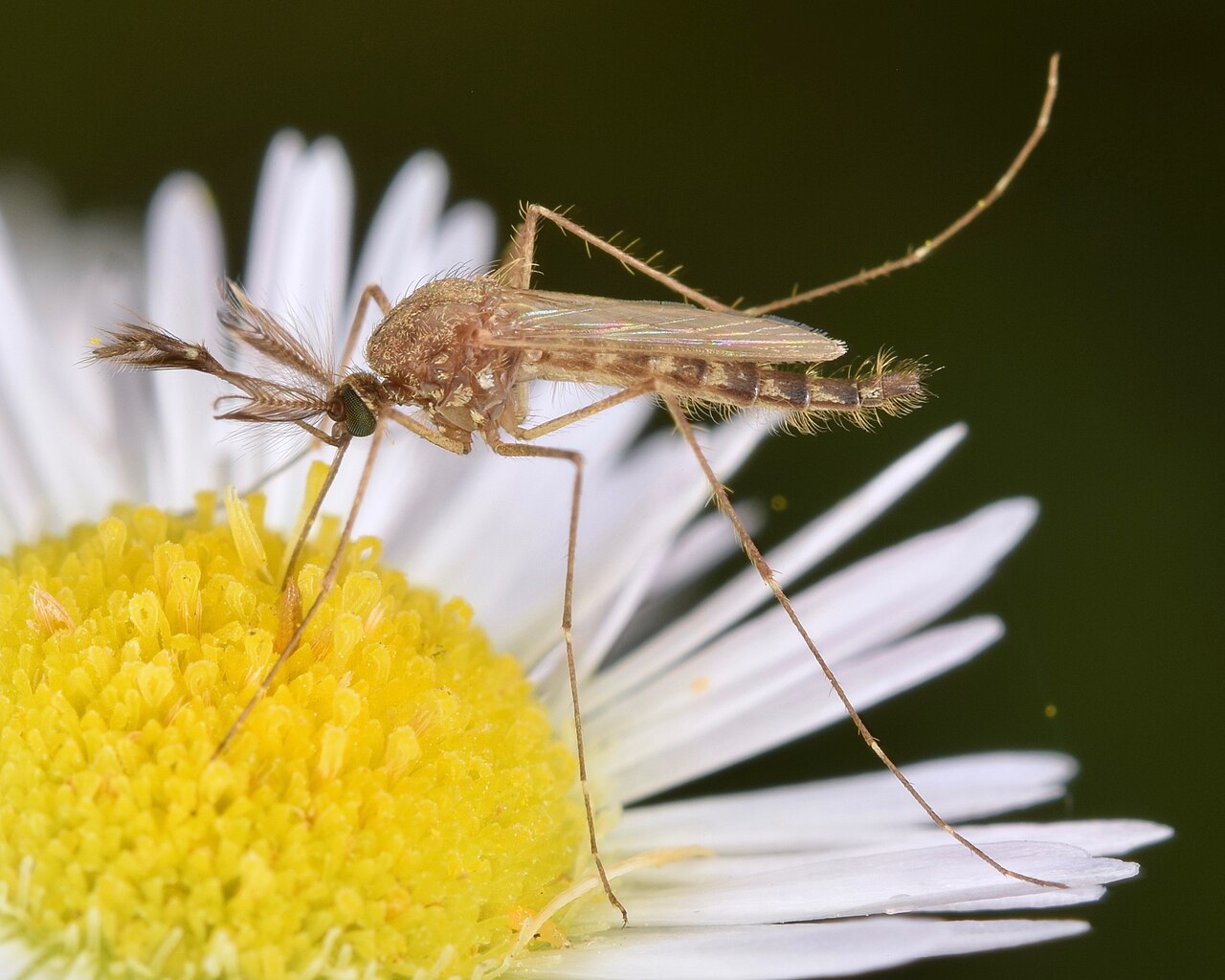
The short answer
Aedes vexans is one of the most widespread mosquito species in North America — present in virtually every US state and Canadian province. It bites aggressively throughout the day, especially at dawn and dusk. Its defining characteristic is its flood-pulse reproduction: eggs are laid in moist soil in low-lying areas, where they can survive dry conditions for months or years, then hatch almost simultaneously when the site floods. The result is explosive population surges that can swamp an area days after heavy rain or snowmelt. It is not a major disease vector, but in terms of sheer misery — biting volume, persistence, and range — it is often the worst mosquito of the summer.
The biology behind the swarm
Most mosquitoes need standing water to complete their life cycle — they lay eggs in water, and larvae develop in water. Aedes vexans is different. Females lay eggs on moist soil at the edges of areas that flood periodically — river floodplains, low meadows, roadside ditches, the margins of wetlands, and agricultural fields in flood-prone terrain. The eggs do not hatch immediately.
Instead, the eggs enter a state of suspended development. They can withstand complete desiccation — baking in dry soil through an entire drought season — and remain viable for one, two, sometimes three or more years. When the site floods (from rain, snowmelt, irrigation, or rising groundwater), the eggs detect the change and hatch en masse, often within 12–24 hours. Larvae develop rapidly in warm water. Adults emerge in 7–10 days. This is why swarms seem to appear from nowhere: in a biological sense, they were always there, waiting in the soil.
Range and where it breeds
Aedes vexans is found coast-to-coast across the continental US, throughout Canada, and on most other continents. Unlike species that are specialists in particular habitats, it is a generalist that exploits any temporarily flooded terrain: river floodplains, agricultural fields, pastures, wet meadows, roadside ditches, construction sites with poor drainage, and suburban yards with low-lying areas that hold water after storms.
In Illinois and Ohio — states with extensive river bottom terrain and agricultural flooding — it is one of the most abundant mosquito species for much of the summer. Significant rain events in June and July trigger predictable population explosions that can overwhelm even people who've lived in an area for decades.
Because of its long flight range (documented at 5–10 miles in some studies), source reduction on individual properties is largely ineffective. Larvae may be hatching in a river bottom a mile away, and adults will find your yard regardless. This is why floodwater mosquito problems are typically addressed at the landscape scale by mosquito control districts, using aerial or ground application of Bti larvicide over flooded terrain.
Biting behavior
Aedes vexans bites throughout the day, with peaks at dawn and dusk — but unlike the very strictly nocturnal Culex species, it will actively pursue hosts in full daylight, particularly when populations are high. It is aggressive and persistent. Swatting does not deter it effectively; disturbed individuals simply circle and return. Multiple females will often attack simultaneously.
It is not host-specific — it feeds on birds, mammals, and humans with approximately equal opportunism. This broad host range is partly why it is not a more effective disease vector: the virus dilution effect means infected blood meals are spread across many host types rather than concentrated in a few high-density reservoir species.
Why you can't really stop floodwater mosquitoes at home. If you're in the middle of a post-rain Ae. vexans surge, property-level source reduction won't make much difference — the adults swarming you hatched from flooded terrain you probably don't own. Your best options are personal protection (repellent, clothing) and contacting your county mosquito control district, which can treat source areas by air.
Disease risk
Aedes vexans is capable of transmitting several viruses under laboratory conditions — including West Nile, Rift Valley fever, and dog heartworm — but it is not considered a major vector for human disease under field conditions in the US. The combination of its broad host range (which dilutes viral amplification) and its tendency to feed on non-reservoir hosts limits its effectiveness as a bridge vector.
The primary burden from this species is nuisance and misery, not disease. But the volume of bites during peak swarms can be genuinely extreme — researchers conducting outdoor work after major flooding events in the Midwest have documented exposure rates of hundreds of bites per hour. That level of intensity warrants serious personal protection regardless of disease risk.
Sources
- Mullen, G. R., & Durden, L. A. (Eds.). (2009). Medical and Veterinary Entomology (2nd ed.). Academic Press. Chapter 12: Mosquitoes (Culicidae).
- Brust, R. A. (1967). Weight and development time of different instars of mosquitoes reared at various constant temperatures. Canadian Entomologist, 99(9), 986–993.
- Service, M. W. (1968). Flight periodicities and landing rates of some Culicidae in England. Entomologia Experimentalis et Applicata, 11(4), 377–386.
- American Mosquito Control Association. Floodwater mosquito species profiles.
Check today's mosquito activity for your area on the home page, or read about eliminating standing water on your property. State guides: Illinois · Ohio.