Western encephalitis mosquito: the night biter that owns the West
Culex tarsalis is the most medically significant mosquito in the western United States and nobody outside the public health world seems to know it exists. It is the primary vector for West Nile virus and Western equine encephalitis across a vast range stretching from the Pacific Coast to the Great Plains. It breeds in the irrigation canals and agricultural standing water that makes western farming possible — and its populations can reach numbers that dwarf anything typical in the East.
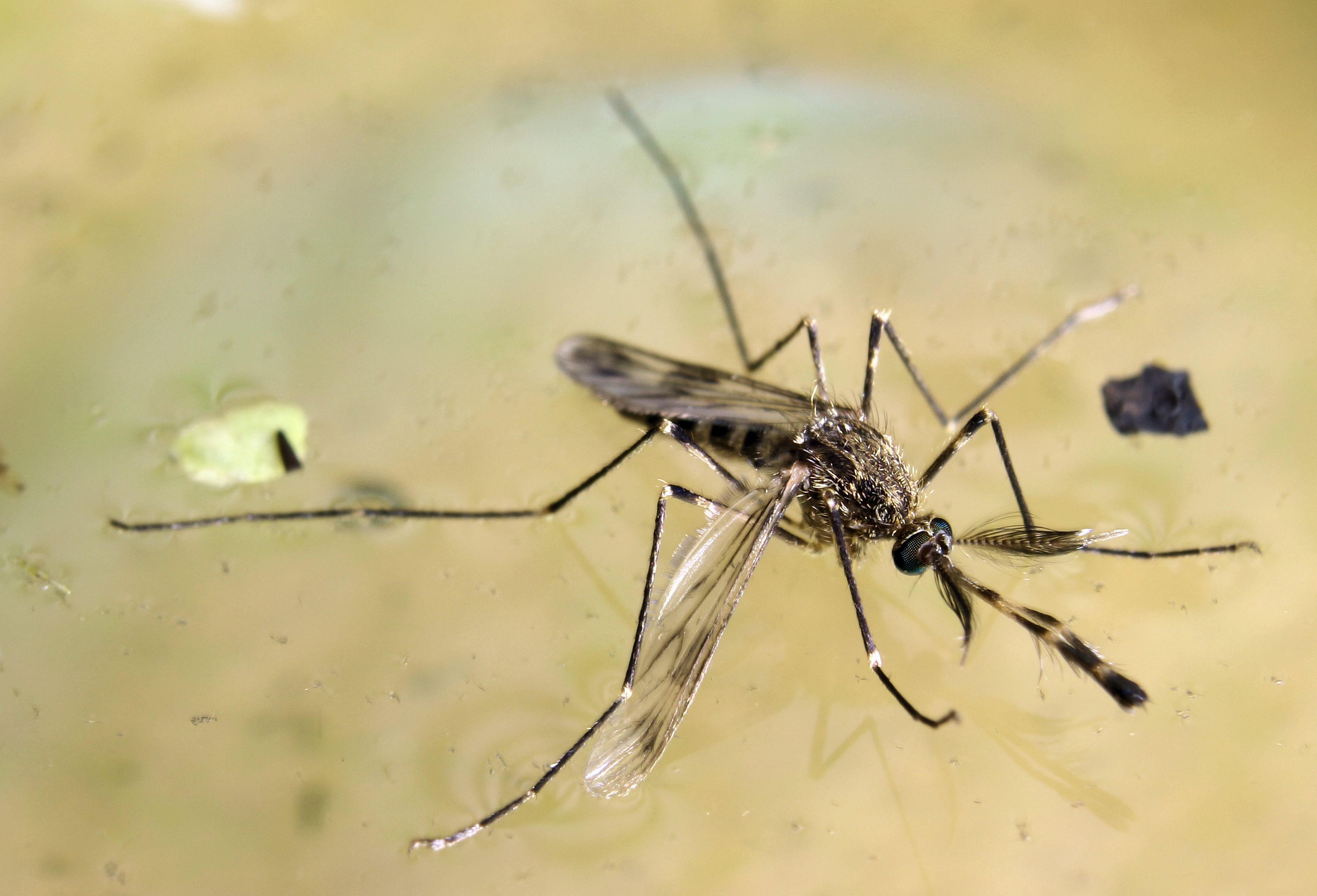
The short answer
Culex tarsalis is a strongly nocturnal species — far more concentrated in the hour after sunset than most Culex. It is abundant across the entire western US and Prairie Canada, breeding in wetlands, irrigation return flows, agricultural ponds, and the standing water that accumulates in irrigated farm country. It is the dominant West Nile vector in California (particularly the Central Valley), Nevada, Arizona, Colorado, and the northern Great Plains. It also carries Western equine encephalitis (WEE), a severe brain inflammation disease that caused major outbreaks in the 20th century. If you're getting bitten hard after dark in the West, and particularly if you're anywhere near irrigated farmland or wetlands, this is the species.
Where it lives
Culex tarsalis is native to western North America and has not established in the East. Its range covers the western two-thirds of the US: the Pacific Coast states, the Mountain West, the desert Southwest, the Great Plains, and the Prairie Provinces of Canada. It is absent or uncommon east of roughly the Mississippi River.
Within this range, abundance tracks irrigation infrastructure and wetland area. California's Central Valley — the most intensively irrigated agricultural landscape in North America — has some of the highest Cx. tarsalis densities anywhere in its range, and consistently ranks as one of the top West Nile transmission zones in the country. The Sacramento Valley, San Joaquin Valley, and their surrounding wetlands create near-ideal conditions: abundant bird populations (the reservoir hosts), abundant standing water (the breeding sites), and warm summer temperatures that accelerate larval development.
How to identify it
Culex tarsalis has two reliable field marks. The first is a white band on the proboscis (the biting tube that extends from the head) — the tube is dark with a pale white ring near the middle. This is distinctive and diagnostic, though it requires getting close enough to see a mosquito's beak, which most people understandably don't. The second mark is white knee-spots on the legs — pale bands at the leg joints that are more prominent than in most other Culex species.
Overall, it is larger and somewhat more robust-looking than Cx. pipiens, with brown and white banding on the abdomen. In the evening light where it's most active, it's often indistinguishable to the casual observer from other large brownish mosquitoes — but if you're in the western US getting bitten hard after dark near any agricultural or wetland area, the odds heavily favor this species.
West Nile and the Central Valley problem
California consistently reports more West Nile virus cases than any other state in years with significant transmission. The reason is Culex tarsalis in the Central Valley. The valley's combination of intensive irrigation agriculture, migratory bird flyways (the Pacific Flyway runs directly through it), abundant bird species that serve as WNV reservoir hosts, and warm summers creates exceptional virus amplification conditions.
Sacramento, Fresno, and Kern counties are typically the most active WNV counties in California — not because these are unusually risky urban areas, but because they sit at the heart of the Valley's irrigated landscape. Residential areas adjacent to rice fields, alfalfa operations, and drainage channels carry meaningfully elevated exposure risk during peak transmission months (July–September).
Western equine encephalitis — the other disease
Before West Nile arrived in 1999, Culex tarsalis was primarily known as the vector for Western equine encephalitis (WEE) — a flavivirus that causes severe inflammation of the brain in horses and humans. WEE was responsible for major outbreaks in the 1930s through 1950s across California, the Great Plains, and Prairie Canada, causing thousands of human cases and far larger numbers in horses.
WEE transmission has declined dramatically since the mid-20th century, for reasons that are still debated among researchers. But the virus has not disappeared — it continues to circulate at low levels in bird populations, and Cx. tarsalis remains its primary vector. The disease is considered a potential re-emergent threat, particularly given changing land use and bird migration patterns.
High-risk window: July–September near irrigation or wetlands. In the Central Valley and western agricultural regions generally, the peak WNV transmission window is July through September. If you live near rice fields, drainage canals, or wetland reserves during these months, evening repellent use and keeping windows screened are meaningful risk reductions — not just comfort measures.
Seasonal and agricultural connection
Culex tarsalis populations are closely tied to irrigation cycles. Spring irrigation of fields and pastures creates standing water that supports the first adult generation of the season. As the summer progresses and temperatures rise, development accelerates — larvae can complete development in 7 days at 80°F. Populations typically peak in July and August, then decline as temperatures cool in late summer and early fall crops are harvested.
In rice-growing regions of the Sacramento Valley, the timing of field flooding and drawdown affects mosquito populations directly — a fact that has led to cooperative agreements between mosquito control districts and rice growers to time water management in ways that reduce peak larval habitat. Mosquito abatement districts in California have been operating aerial Bti applications over rice fields since the 1970s.
Sources
- Reisen, W. K., et al. (2004). Temporal and spatial distribution of West Nile virus in the Central Valley of California. American Journal of Tropical Medicine and Hygiene, 70(5), 524–529.
- Reisen, W. K. (1995). Effect of temperature on Culex tarsalis (Diptera: Culicidae) from the Coachella and San Joaquin Valleys of California. Journal of Medical Entomology, 32(5), 636–645.
- Goddard, L. B., et al. (2002). Vector competence of California mosquitoes for West Nile virus. Emerging Infectious Diseases, 8(12), 1385–1391.
- California Department of Public Health. West Nile virus surveillance in California.
Check today's mosquito activity for your area on the home page, or read about US mosquito disease risk by region. State guide: California.