Common house mosquito: the gutter breeder behind northern West Nile
Culex pipiens — the northern or common house mosquito — is the reason West Nile virus established itself so quickly in American cities after arriving in New York in 1999. It loves the infrastructure of urban life: clogged gutters, catch basins, storm drains, and standing water in neglected containers. If you're getting bitten after dark in Illinois, New York, or Ohio, you've probably met this one already.
The short answer
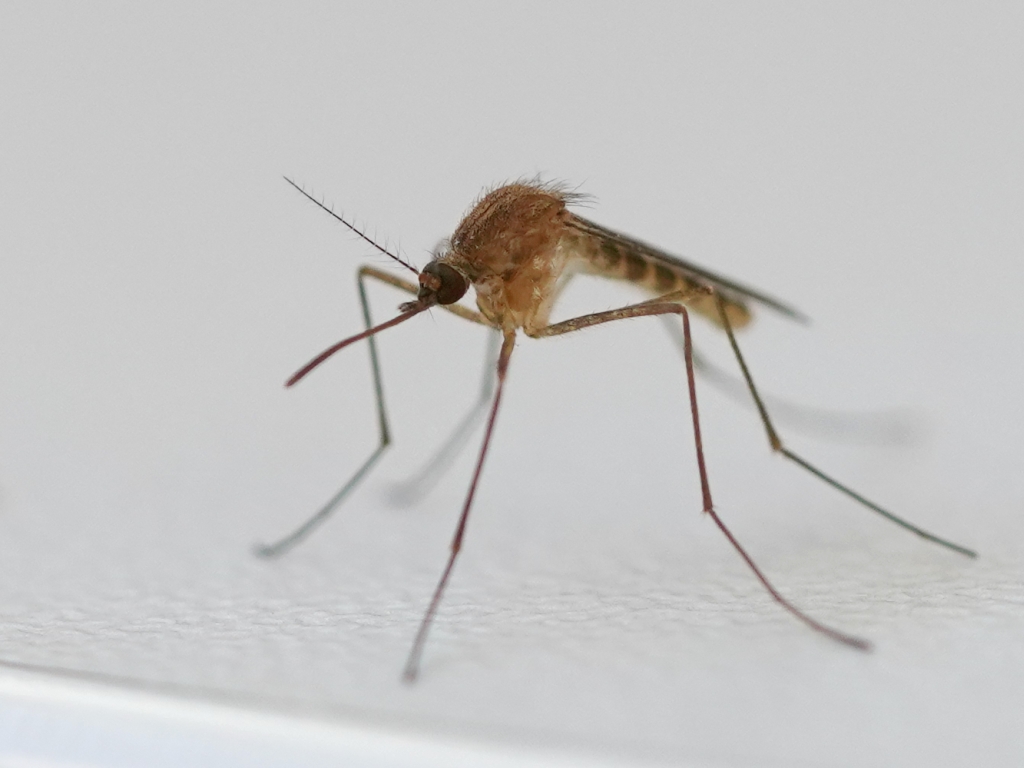
Culex pipiens is the dominant mosquito species in northern cities and suburbs. It bites at dusk and dawn, feeds heavily on birds (which makes it an efficient West Nile amplifier), and readily enters homes. It overwinters as mated females in basements, storm tunnels, and culverts — emerging in spring to lay the season's first egg rafts. Its primary breeding sites are the stagnant water features of urban infrastructure: gutters, catch basins, and roadside standing water. If you're in the Northeast, Midwest, or Mid-Atlantic and you're getting attacked in the evenings, this is the species.
How it compares to the southern house mosquito
Culex pipiens and Culex quinquefasciatus (the southern house mosquito) are so closely related that they were long considered the same species. They are nearly identical in appearance, overlap in range across the mid-latitudes, and hybridize freely in the transition zone — roughly the Carolinas through Kansas. The key differences are behavioral: Cx. pipiens is more cold-adapted (it overwinters; Cx. quinquefasciatus does not), and it has a stronger preference for bird blood in early season before shifting to mammals as the summer progresses. This shift is what drives late-summer West Nile spikes — by July and August, the bird population is infected and the mosquitoes are increasingly feeding on humans.
The West Nile story: how New York became ground zero
West Nile virus arrived in North America in 1999, likely via an infected bird or mosquito on an international flight. It was first detected as a die-off of crows and other corvids in Queens, New York, followed by a cluster of severe encephalitis cases in elderly patients. The vector responsible was Culex pipiens — the most abundant mosquito in the New York metro area.
The virus spread west at a pace that surprised researchers, reaching the Pacific Coast by 2003. By 2004 it had documented transmission in every contiguous state. The spread tracked the distribution of Culex pipiens and its southern relative — the two species are the primary vectors across virtually the entire country.
Illinois had the most acute urban outbreak. The 2002 Cook County West Nile event — centered in Chicago's northern suburbs — was the largest urban WNV outbreak in US history, with over 800 cases and 64 deaths. It established Cx. pipiens as the primary public health target for mosquito control agencies in northern cities, a status it still holds.
The overwintering habit creates a spring risk window. Mated female Cx. pipiens overwinter in basements, storm tunnels, and culverts — occasionally in large numbers. They can enter homes through gaps and floor drains. If you find a cluster of torpid mosquitoes in your basement in late winter or early spring, this is the species. They're not actively biting (they're dormant), but they'll become active as temperatures warm.
How to stop it from breeding on your property
The gutter is the highest-leverage target. A clogged gutter full of wet leaf debris can produce hundreds of adult mosquitoes per week during peak season. Cleaning gutters twice per season — spring and midsummer — and keeping downspouts draining freely is the single most impactful yard action for this species.
After the gutter, work through the property in order of water volume: any container holding more than a cup of standing water for more than five days is a potential breeding site. Birdbaths should be emptied and refilled every 3–4 days during peak season. Catch basins in the driveway can be treated with Bti dunks. Low spots in the yard that puddle after rain for more than a week are worth addressing with fill or improved drainage.
Screen integrity matters. Cx. pipiens enters homes readily and likes to rest indoors during daylight. Check screens in late spring before season begins and repair any gaps, particularly in basement windows and floor vents.
Sources
- Nasci, R. S., et al. (2001). West Nile virus in overwintering Culex pipiens and emergence of West Nile virus-infected mosquitoes in spring. Emerging Infectious Diseases, 7(1), 102–103.
- Kilpatrick, A. M., et al. (2005). West Nile virus risk assessment and the bridge vector paradigm. Emerging Infectious Diseases, 11(3), 425–429.
- Marm Kilpatrick, A. (2011). Globalization, land use, and the invasion of West Nile virus. Science, 334(6054), 323–327.
- Centers for Disease Control and Prevention. West Nile virus — national surveillance data.
Check today's mosquito activity for your area on the home page, or read about the southern counterpart: southern house mosquito. State guides: Illinois · New York · Ohio.