IsItMosquitoSeasonYet
← National tracker
Florida · Mosquito Season Guide

Is it mosquito season in Florida?


Right now Live
···

Check a Florida city
II. Florida Mosquito Season Month by month

Florida has more mosquito species than any other continental US state. In South Florida, season never really ends — in the north, it peaks May through October.

South Florida
Miami · Fort Lauderdale · Keys · Naples
Central Florida
Orlando · Tampa · Fort Myers · Sarasota
North Florida / Panhandle
Jacksonville · Tallahassee · Pensacola
Very Low Low Moderate High Very High taller = more active · color = severity
80+
mosquito species found in Florida
~365
days of activity possible in South FL
3
species of major public health concern
33
FDOH mosquito control districts statewide

South Florida vs. North Florida

Florida effectively has two mosquito seasons. South of the Orlando–Daytona line — Miami-Dade, Broward, Palm Beach, Collier, and Monroe counties — conditions stay warm enough for baseline activity year-round. Culex populations slow in January and February but never reach zero. North of that line, including Jacksonville, Tallahassee, and the Panhandle, the pattern resembles the broader Southeast: a genuine low-activity period in winter, building through spring, peaking in summer.

When is it worst?

Statewide peak runs June through September. Florida's summer rainy season dumps roughly 60% of annual rainfall between June and September — creating massive standing water that drives breeding populations to their highest levels of the year. Dawn and dusk remain the worst windows, but the daytime-biting Asian tiger mosquito makes midday uncomfortable statewide as well.

The Everglades factor

The Everglades, Ten Thousand Islands, and Florida Bay create permanent high-output breeding habitat with no winter interruption. Residents in Broward, Miami-Dade, and Collier counties should treat mosquito protection as a year-round practice, not a seasonal one.
III. Florida's Three Species to Know
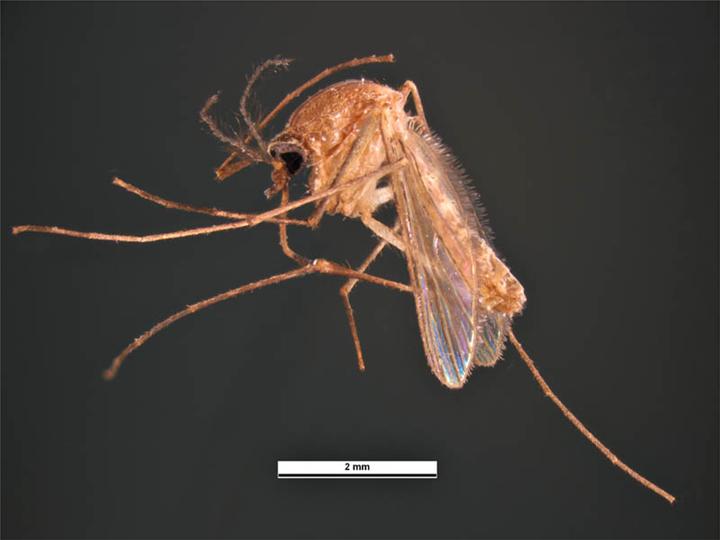
Culex quinquefasciatus macro photograph
Culex quinquefasciatus
Southern House Mosquito

The primary West Nile Virus vector in Florida. A dusk-to-dawn biter preferring birds but readily feeding on humans. Breeds in storm drains, bird baths, clogged gutters. Present statewide year-round in South FL.
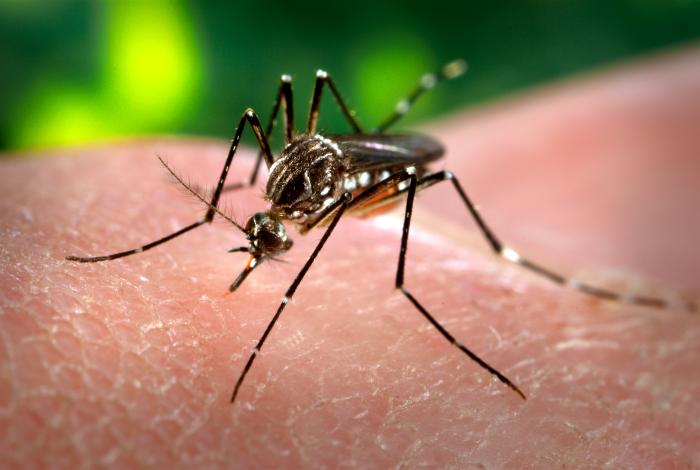
Aedes aegypti macro photograph — CDC / James Gathany, public domain
Aedes aegypti
Yellow Fever Mosquito

A daytime biter capable of transmitting dengue, Zika, and chikungunya. Concentrated in South Florida — mainly Miami-Dade, Broward, Palm Beach, and Monroe. Does not range north of Orlando.
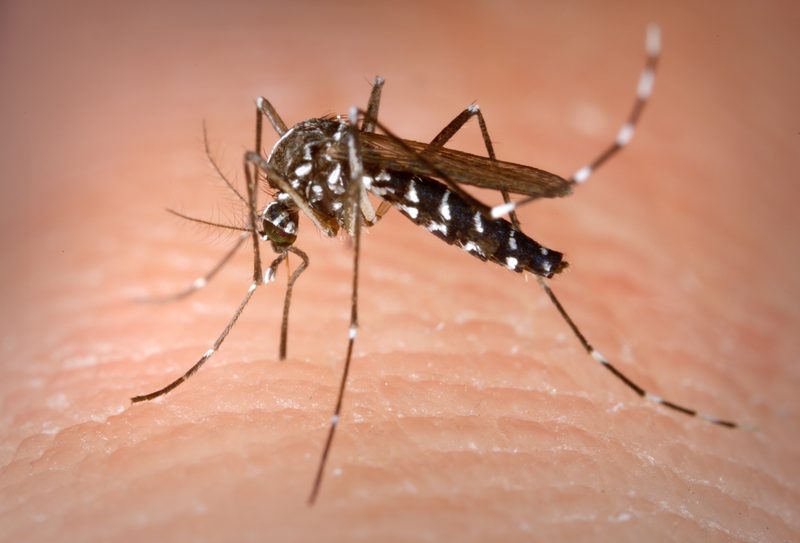
Aedes albopictus — Asian tiger mosquito macro photograph
Aedes albopictus
Asian Tiger Mosquito

Statewide and spreading. Bites aggressively during the day — including midday — making standard dusk/dawn protection insufficient for anyone spending time outdoors in Florida.

Florida is unusual: two of its three key species bite during daylight. Full-day protection — repellent applied in the morning, not just at dusk — is warranted during peak season.

IV. Florida Cities at a Glance
City Peak Season Off-Season Notes
Miami May – Oct Low (never zero) Year-round activity; Ae. aegypti present Check live
Fort Lauderdale May – Oct Low (never zero) Similar to Miami; Broward County programs active Check live
Tampa May – Oct Near-zero Dec–Feb Hillsborough Co. has one of Florida's most active control programs Check live
Orlando May – Oct Near-zero Dec–Feb Central FL transition zone; heavy summer rain drives peaks Check live
Jacksonville May – Sep Off Dec–Feb North FL pattern; season comparable to coastal Georgia Check live
Tallahassee May – Sep Off Nov–Mar Panhandle region; shorter season, cooler winters Check live
Key West All year Subtropical; never fully dormant. Ae. aegypti active year-round. Check live
More State Guides
Texas ~85 species across four climate zones — Gulf Coast active March through November, with year-round pressure in the Rio Grande Valley California Central Valley is the #1 West Nile corridor in the US — invasive Ae. aegypti and Ae. albopictus now established in 20+ counties Georgia Atlanta metro leads the Southeast in Asian tiger mosquito density — active statewide March through November New York Ground zero for West Nile in the US (1999 Queens outbreak) — NYC metro and Long Island see the highest Northeast seasonal pressure Illinois Home of the 2002 Cook County West Nile outbreak — the deadliest urban WNV event in US history — peak season June through September Ohio Lake Erie to the Ohio River — WNV active in Franklin and Cuyahoga counties, with floodwater species surging after summer storms Pennsylvania Philadelphia WNV corridor meets rural EEE risk in western PA — the densest human population in the mid-Atlantic mosquito belt Michigan Site of the 2019 EEE outbreak — the deadliest in decades — 10 human cases and 6 deaths concentrated in SW Michigan Great Lakes wetlands New Jersey Oldest organized county mosquito control in the US (1914) — Pine Barrens EEE corridor and fierce salt marsh Shore species Virginia Tidewater season runs April–October — the longest mid-Atlantic window — with the Great Dismal Swamp as an active EEE hotspot North Carolina The coastal plain runs one of the longest seasons in the Southeast — NC leads the nation in La Crosse encephalitis cases from the Appalachian foothills Maryland Chesapeake Bay watershed creates extraordinary mosquito habitat — tidal marshes, Eastern Shore wetlands, and the DC-Baltimore corridor combine for dense seasonal pressure Tennessee Memphis and the Mississippi River corridor historically record the highest WNV case counts in the mid-South — Ae. albopictus has colonized all 95 counties Indiana Indiana sits at the crossroads of the Great Lakes EEE belt — Lake Michigan wetlands in the north and the Wabash River floodplain drive intense seasonal pressure Louisiana The Gulf Coast's most intense pressure — coastal marshes and summer rains keep Cx. quinquefasciatus and Ae. aegypti active from March through November Alabama Mobile Bay to the Tennessee Valley — Ae. albopictus has reached all 67 counties and peak WNV season runs June through September South Carolina Low Country marshes produce some of the Southeast's densest Anopheles and Culex populations — season runs March through November Minnesota 10,000 lakes means 10,000 breeding sites — the Northwoods sees intense but short July–August peaks, while the Twin Cities face a longer June–September window Wisconsin Great Lakes wetlands and the Mississippi River backwaters drive strong WNV pressure in the Milwaukee corridor — peak season July through August Missouri At the confluence of the Missouri and Mississippi rivers — St. Louis historically ranks among the highest WNV cities in the US — season May through October Arkansas Delta rice-field flooding and the Arkansas River bottomlands create some of the highest rural mosquito pressure in the mid-South — active April through October Washington Western WA stays mild and damp year-round; the Yakima Valley and Columbia Basin face the highest WNV risk in the Pacific Northwest — peak July through September Arizona Monsoon season (July–September) drives sudden mosquito explosions across the Valley of the Sun — WNV detected annually Colorado Front Range WNV corridor stretches Denver to Fort Collins — eastern plains carry the state's highest risk Connecticut Connecticut River valley WNV pressure meets EEE risk in inland freshwater wetlands — active May through October Delaware Chesapeake and Delaware Bay marshes create outsized pressure for the nation's second-smallest state Hawaii Year-round activity at sea level — no native species, but Ae. aegypti and tiger mosquitoes established statewide Idaho Snake River Plain irrigation districts fuel summer WNV pressure — season June through September Iowa Mississippi River corridor and prairie wetlands drive intense June–September pressure — WNV active statewide Kansas Great Plains WNV corridor — Wichita and Kansas City see peak pressure July–August; floodwater species surge after storms Kentucky Ohio River corridor and Kentucky Lake wetlands sustain a long April–October season across all 120 counties Maine Short but intense July–August season — EEE detected in some years in the southern coastal plain Massachusetts EEE fatality rate exceeds 30% — the Plymouth County swamp complex is the active epicenter — season May through October Mississippi Gulf Coast near-year-round pressure meets Delta rice-field flooding for one of the South's most intense mosquito environments Montana Yellowstone and Missouri River corridors drive a compressed June–August season — WNV detected most years in eastern MT Nebraska Platte River valley and eastern Nebraska are among the Great Plains' most active WNV zones — peak July–August Nevada Las Vegas monsoon season drives July–September activity; Reno irrigation districts fuel a parallel northern peak New Hampshire EEE detected most years — the southern lakes and coastal plain are in the active Northeast EEE corridor New Mexico Monsoon season (July–September) creates sudden breeding habitat; WNV circulates in the Rio Grande valley annually North Dakota Red River Valley flooding produces some of the Great Plains' most extreme floodwater mosquito events — peak June–August Oklahoma One of the South-Central's most intense seasons — the Arkansas and Red River corridors sustain populations April through October Oregon Eastern Oregon Columbia Basin is the state's WNV hotspot; western Oregon runs a mild coastal season June through September Rhode Island New England's densest coastal pressure — Narragansett Bay salt marshes and WNV active in all five counties South Dakota Missouri River and James River valleys drive summer WNV activity — eastern SD sees the most intense pressure Utah Salt Lake Valley WNV corridor and irrigation districts sustain a July–September peak — drier areas see limited activity Vermont Champlain Valley runs Vermont's longest season — EEE detected in the Lake Champlain lowlands in some years West Virginia Kanawha and Ohio River valleys sustain a May–October season — Ae. albopictus now established statewide Wyoming The shortest meaningful season of any contiguous US state — North Platte valley WNV window is just 6–8 weeks
West Nile, dengue, and EEE: US disease risk by region → Asian tiger mosquitoes: why you're getting bitten during the day → Eliminating standing water: the highest-leverage yard move →