Is it mosquito season in New Jersey?
New Jersey has had organized county mosquito control since 1914 — the oldest program in the United States. More than a century of coordinated effort has reduced nuisance biting significantly across much of the state, but three problems persist: Culex pipiens WNV transmission in the urban north, salt marsh mosquitoes on the Shore, and EEE eruptions in the Pine Barrens.
Chart reflects northern New Jersey / Newark baseline. The Shore and southern NJ (Atlantic, Cape May counties) can be significantly higher in nuisance biting due to salt marsh species, particularly after coastal events.
A century of control — and three problems that persist
New Jersey has invested more in organized mosquito control per square mile than virtually any state in the country. Every county has its own mosquito control commission; crews inspect catch basins, ditches, and wetlands; biological larvicide (Bti) is applied by air and ground throughout the season. The results are real — without this infrastructure, NJ's dense population, extensive tidal wetlands, and humid summers would produce far worse conditions. But control has its limits. Culex pipiens WNV transmission in the Newark/Trenton metro corridor remains an annual event, EEE surfaces in the Pine Barrens most seasons, and salt marsh mosquitoes at the Shore are more of a natural phenomenon than a control problem.
The Pine Barrens: EEE country
Burlington, Ocean, and Atlantic counties — covering much of the Pine Barrens — are the core EEE zone in New Jersey. The Pinelands' forested swamps and boggy cedar wetlands create ideal breeding conditions for Culiseta melanura, the primary EEE amplifier. EEE activity is detected in NJ surveillance traps most seasons; human cases occur irregularly but carry a high fatality risk. The New Jersey Department of Health (NJDOH) issues county-level EEE risk advisories based on weekly trap data, and aerial spray operations are sometimes deployed in Burlington County during high-risk periods.
The Shore: salt marsh mosquitoes
Coastal counties — Ocean, Monmouth, Atlantic, Cape May — host significant populations of Aedes sollicitans (salt marsh mosquito) and related species. These breed in tidal salt marshes that fringe the barrier islands and mainland shore. Salt marsh mosquitoes are aggressive, wide-ranging biters — adults can travel several miles from their breeding sites, making control difficult. Shore visitors experience this as relentless outdoor biting in evening hours from June through September. County mosquito commissions apply mosquito-control ditches and larvicide in salt marshes, but the sheer acreage limits effectiveness.
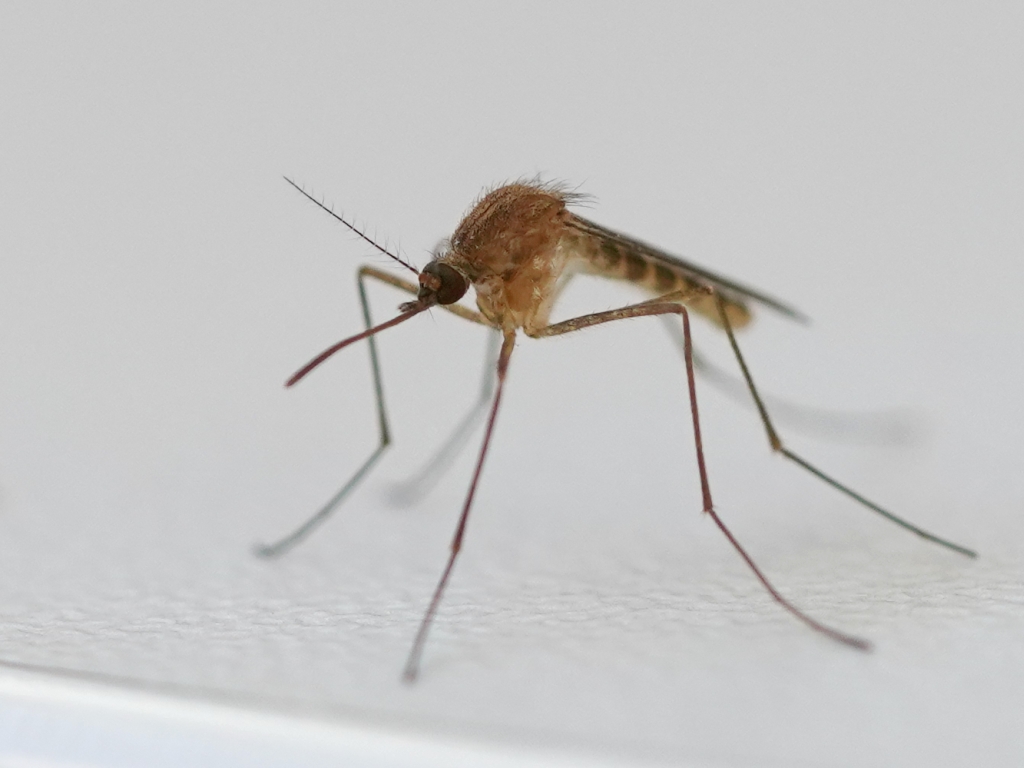
The dominant mosquito in the Newark/Jersey City metro, across suburban North Jersey, and in the Trenton corridor. Breeds in stagnant water — storm drains, catch basins, birdbaths, standing containers. Feeds at dusk and overnight, shifting from birds to humans in late summer. WNV is detected in NJ Cx. pipiens surveillance pools every season; Essex, Hudson, Middlesex, and Mercer counties historically carry the highest burden. NJDOH weekly trap reports are the best indicator of elevated local risk.
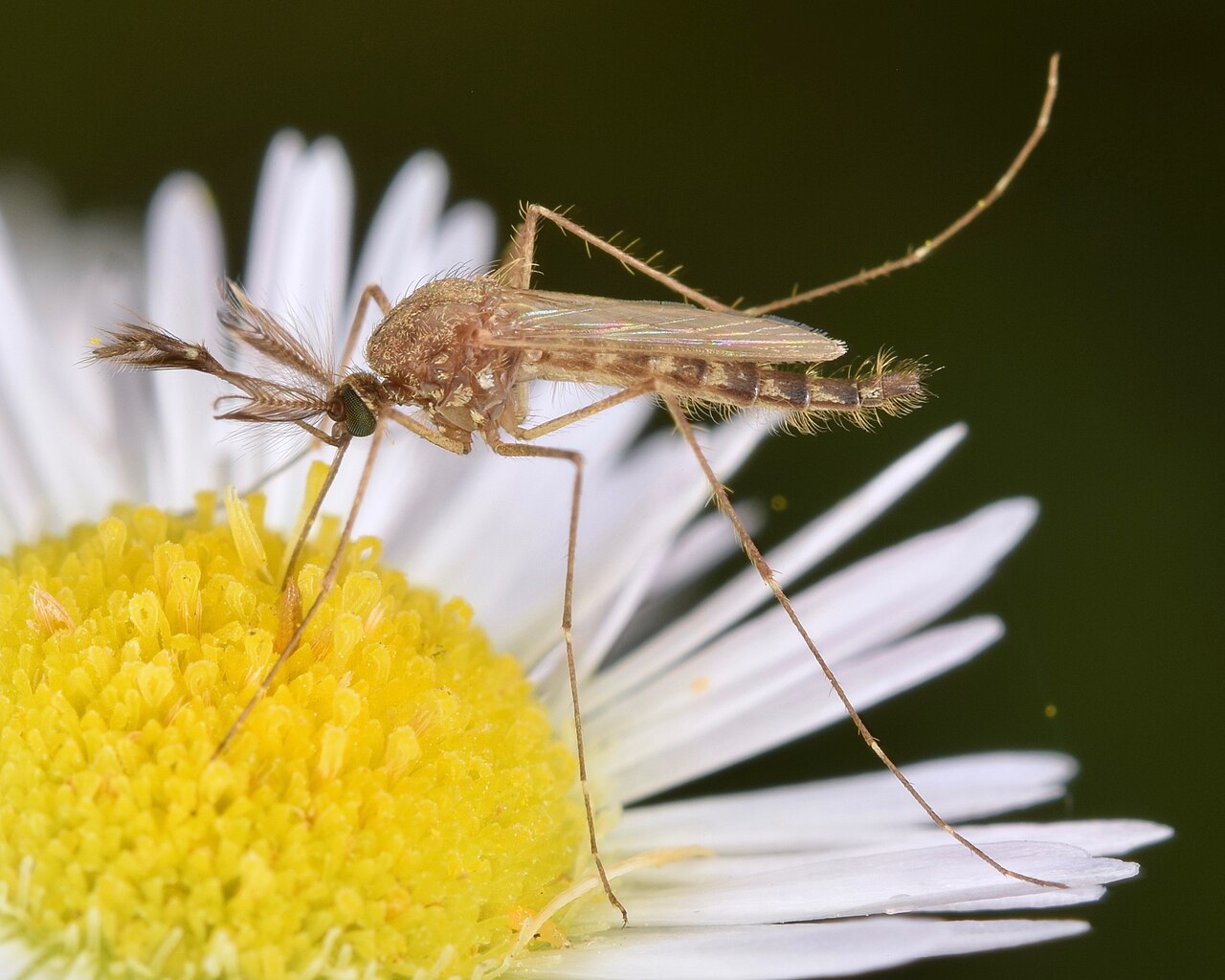
The signature species along the New Jersey Shore. Breeds in coastal salt marshes — vast tidal flats that fringe the barrier islands and back bays from Sandy Hook to Cape May. An aggressive daytime and evening biter that can travel several miles from breeding sites, making it the dominant annoyance mosquito for Shore visitors and residents. Not a significant disease vector, but responsible for most of the memorable biting misery at the Shore from June through September. County control programs treat marshes with Bti but cannot eliminate such extensive habitat.
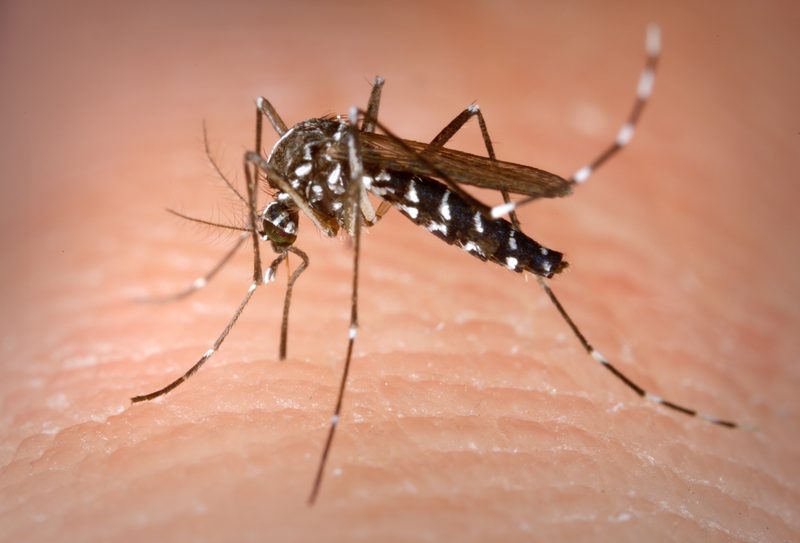
Well established across all of New Jersey and one of the primary daytime nuisance biters in suburban yards statewide. Visually distinctive: black with bold white stripes. Bites aggressively during daylight — especially morning and late afternoon — making it the mosquito suburban NJ residents encounter most often in their own backyards. Breeds in tiny water volumes: bottle caps, gutters, tarps, saucers under pots. NJ's density and heavy rainfall support large populations. Eliminating container water weekly is the most effective control available to homeowners.
EEE is present in NJ surveillance traps most seasons. If you're camping or hiking in the Pine Barrens (Burlington, Ocean, Atlantic counties), or near forested wetlands anywhere in southern NJ, take dusk and dawn precautions seriously during mosquito season. Check current NJDOH EEE risk advisories →
| City | Active Season | Off-Season | Notes | Live data |
|---|---|---|---|---|
| Newark | May – Sep | Near-zero Oct–Apr | Essex County; Culex pipiens dominant; urban density and storm drain infrastructure favor WNV breeding; Ae. albopictus well established in neighborhoods; Passaic River corridor; NJDOH and Essex County Mosquito Control coordinate WNV surveillance; highest urban WNV risk in state | Check live |
| Jersey City | May – Sep | Near-zero Oct–Apr | Hudson County; high urban density; WNV detected in Hudson County traps most seasons; limited open water habitat limits absolute population size but Cx. pipiens exploits every available container and drain; Ae. albopictus common in residential blocks | Check live |
| Trenton | May – Sep | Off Oct–Apr | Mercer County; Delaware River corridor; floodplain habitat amplifies Ae. vexans after heavy rain; WNV detected in Mercer County traps regularly; state capital — NJDOH publishes surveillance data here; Ae. albopictus present | Check live |
| Atlantic City | May – Sep | Off Oct–Apr | Atlantic County; surrounded by salt marsh habitat — Aedes sollicitans pressure can be intense from June through September; back bay marshes around the barrier islands are primary breeding habitat; county mosquito control conducts extensive salt marsh treatment; EEE detected in Atlantic County surveillance most seasons | Check live |
| Camden | May – Sep | Off Oct–Apr | Camden County; Delaware River; adjacent to Burlington County (core EEE zone) — check NJDOH EEE advisories; Culex pipiens and Ae. albopictus dominant in urban/suburban areas; South Jersey season slightly longer than North Jersey | Check live |
| Morristown | May – Sep | Off Oct–Apr | Morris County; inland / northern NJ; forested suburban terrain; Ae. albopictus very well established and the dominant nuisance species; WNV risk lower than urban counties; lower EEE risk than Pine Barrens; wooded lots and leaf litter piles support container breeders | Check live |
| Cherry Hill | May – Sep | Off Oct–Apr | Camden County; South Jersey suburb; proximity to Burlington and Atlantic county EEE zones — check advisories in high-risk years; Ae. albopictus and Cx. pipiens dominant; dense suburban landscaping favors container breeding; season slightly longer than North Jersey | Check live |